.png)
Westchester County holds a concentration of people who carry risk with them. Corporate headquarters line the I-287 corridor. Private aviation moves through Westchester County Airport all day. Towns like Rye, Scarsdale, Bedford, Armonk, and Purchase are home to executives, public figures, and families whose names appear in filings, headlines, and search results.
Most of these people will never face a serious threat. A smaller number will face something: a fixated individual, a hostile former employee, a contentious divorce, a lawsuit that turned personal, a sudden burst of media attention. Executive protection exists for that group, and for the people who would rather plan ahead than react.
This guide explains what executive protection is, who uses it in Westchester County, how New York regulates it, and how to hire a provider that will hold up under pressure. It is written for principals, and for the executive assistants, chiefs of staff, and family office managers who usually make the call.
What Executive Protection Actually Is
Executive protection is the practice of keeping a specific person safe while allowing that person to live and work normally. The person being protected is called the principal. The professional doing the protecting is a protective agent, sometimes called a close protection agent or a bodyguard.
The public image of this work is wrong in almost every detail. Good protection is quiet. It looks like a well-dressed professional who opens a door, stays a few steps away, and seems to know where everything is. The agent knows where the exits are because the agent walked the building the day before. The agent knows the route because the agent drove it at the same hour last week. The visible part of the job is small. The planning is the job.
A working definition has four parts:
- Assessment. Understanding what the principal is exposed to, from whom, and where.
- Advance work. Visiting or researching every location before the principal arrives. Entrances, exits, parking, hospital proximity, local police, building security contacts.
- Movement. Getting the principal from one secure place to another. This is where most exposure happens, which is why protection and transportation are so closely tied.
- Presence. Being near the principal with the training and authority to intervene, de-escalate, or evacuate.
Notice that three of those four parts happen before anything goes wrong. A detail that is doing its job produces uneventful days. That is the product.
Stealth Protection provides licensed executive protection across Westchester County and Fairfield County, with agents available armed or unarmed depending on the engagement.
Who Uses Executive Protection in Westchester County
The client list is broader than most people assume. In our service area it falls into six groups.
Corporate executives
Westchester is a headquarters county. Public company officers have disclosed compensation, published schedules, and shareholders who are sometimes angry. Boards increasingly treat executive security as a governance matter, particularly around earnings, layoffs, litigation, and annual meetings. Protection for this group is often tied to corporate transportation, since the daily commute and the airport run are the most predictable parts of an executive's week.
High net worth families
Families in Bedford, Pound Ridge, Chappaqua, Harrison, and the Sound Shore towns often want protection that does not look like protection. A licensed agent who drives the children to school and activities. Coverage during travel. A presence at the residence during a renovation, when dozens of unfamiliar workers have access to the property.
Public figures and entertainers
Athletes, broadcasters, musicians, and creators live in the county because it is private and close to the city. Their exposure rises sharply around appearances, releases, and anything that trends online. Coverage is usually event driven.
People in a temporary high-risk period
This is the largest and least discussed group. A termination that went badly. A restraining order. A court date. A business dispute with an unstable counterparty. These clients do not need a permanent detail. They need competent coverage for days or weeks, and they need it arranged quickly.
Visiting principals
Foreign executives, dignitaries, and out-of-state clients flying into Westchester County Airport or Teterboro who need a local team that knows the ground. Their own security staff, if they have any, often lack New York licensing and cannot legally work here. A local licensed provider solves that.
Events
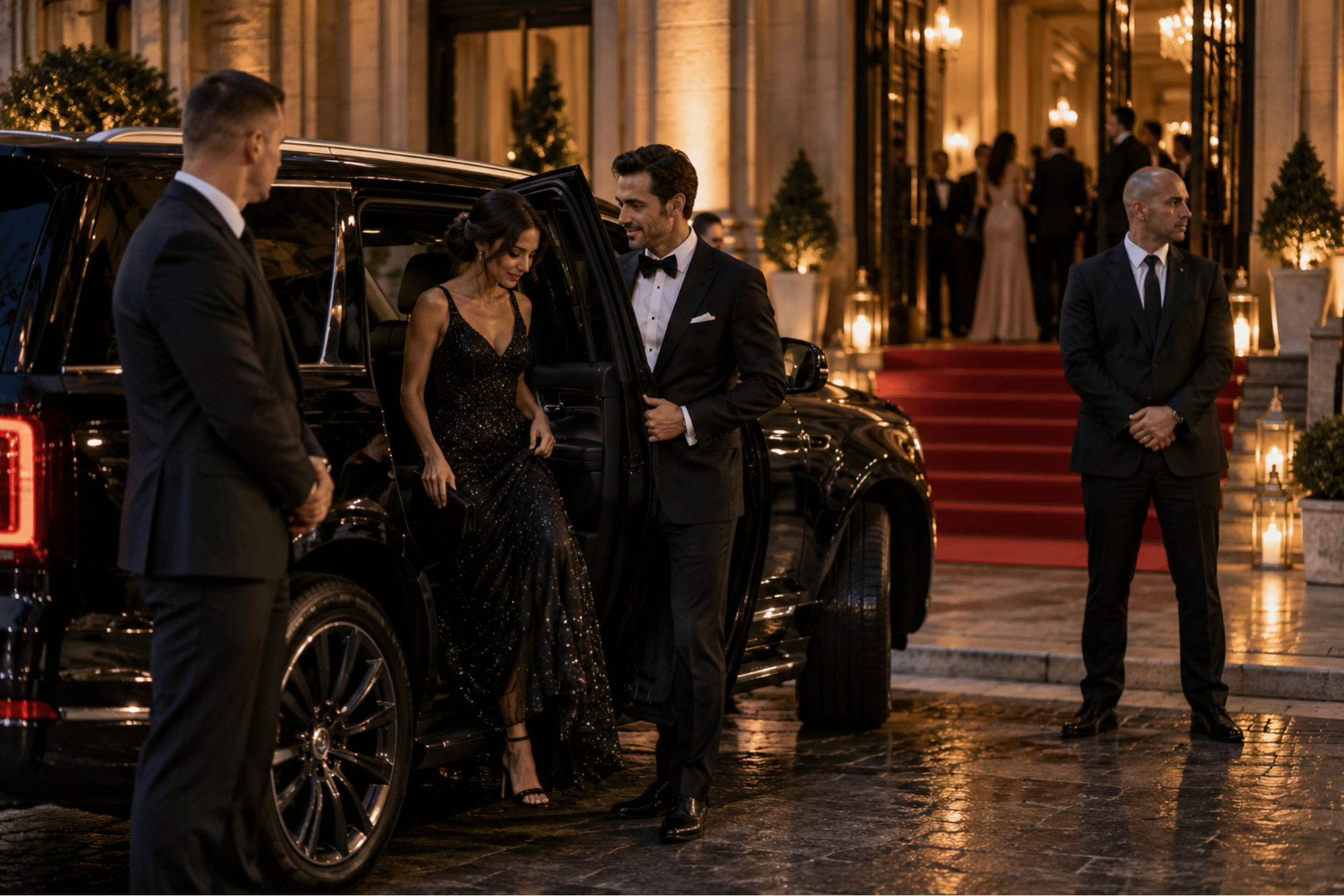
Galas, private parties, shareholder meetings, weddings with notable guests. The need here is a combination of protective agents and coordinated vehicles, which is covered under event chauffeur and transportation service.
What a Protective Detail Does, Hour by Hour
Abstract descriptions do not help a buyer. Here is what a single day of coverage looks like for an executive traveling from a home in Rye to meetings in Midtown Manhattan and back.
The day before. The agent confirms the itinerary with the executive assistant. Addresses, contact names at each building, entrance preferences, timing. The agent checks each location: which entrance has the shortest exposed walk, where the vehicle can stage, which building security desk needs notice. The agent plans a primary route and an alternate, and notes the nearest trauma center to each stop.
Morning. The vehicle arrives early and stages out of sight of the street if possible. The agent does a walk-around of the vehicle and a visual check of the approach to the residence. The principal exits the home and is in the vehicle within seconds. There is no standing on the driveway.
In transit. The driver is trained in protective driving, which means spacing, lane choice, awareness of vehicles that stay behind too long, and never getting boxed in at a light. The principal works in the back seat. None of this is visible to the principal unless something happens.
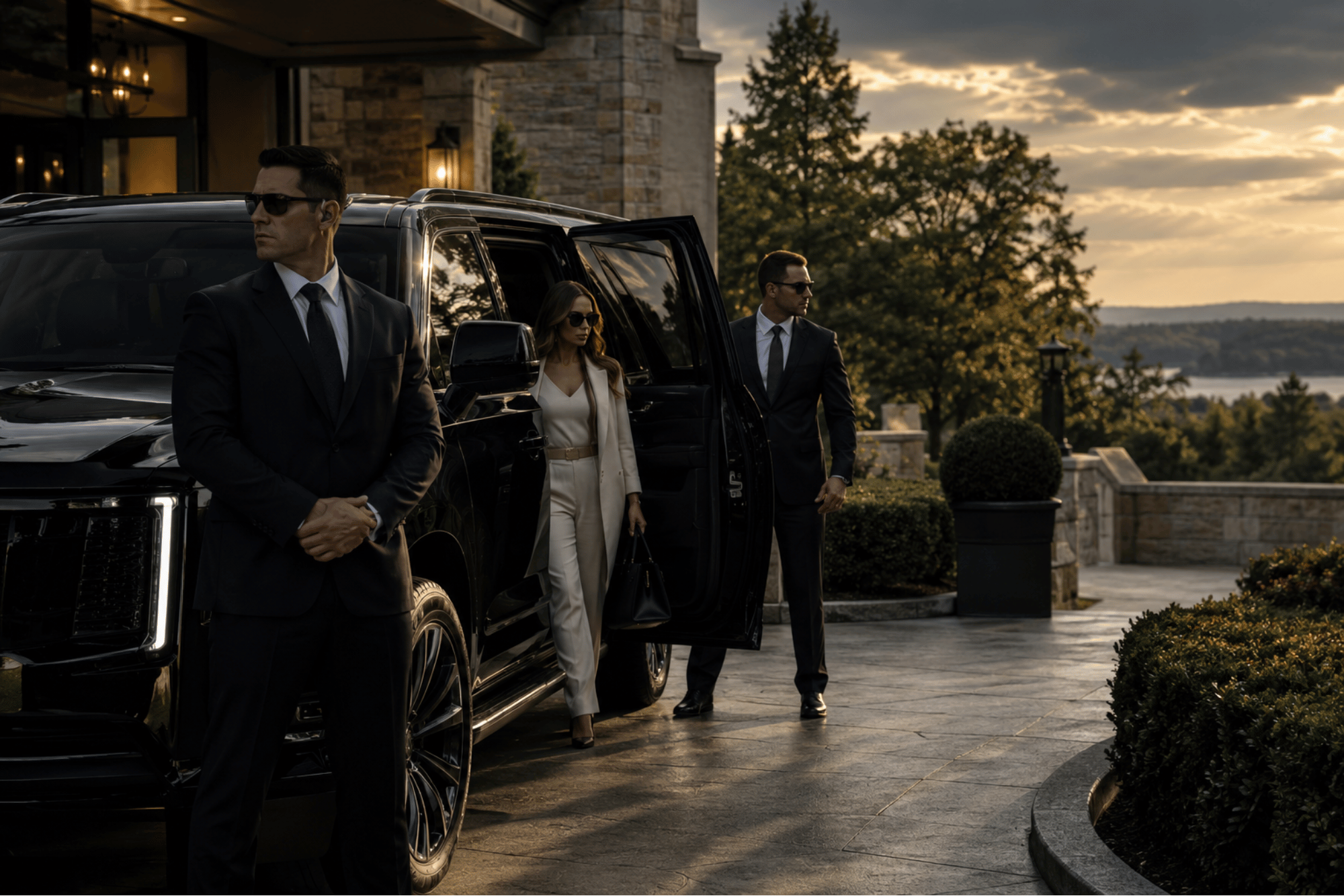
Arrivals. The vehicle pulls to the planned entrance. The agent exits first, looks, opens the door, and walks the principal in. The driver remains with the vehicle, engine running, until the principal is inside. For the rest of the meeting the vehicle stages nearby and the agent positions according to the plan agreed with the client. Some principals want the agent outside the meeting room. Some want the agent in the lobby. Both are workable.
Departure and return. The same procedure in reverse. The agent does not announce departure times to building staff any earlier than necessary. The route home differs from the route in.
After. A brief report to the point of contact. Anything unusual is logged, including things that turned out to be nothing. Patterns only appear when someone writes them down.
This is the rhythm of secure transportation: a protective service built around movement. For many Westchester clients it is the right level of coverage. A full residential and travel detail is a larger engagement and is scoped individually.
How New York Regulates Executive Protection
This section matters more than any other in this guide, because it is how you separate legitimate providers from everyone else.
In New York State, security work is regulated by the Department of State, Division of Licensing Services. Two layers apply.
The company. A business that provides guard or protective services for hire must hold a Watch, Guard or Patrol Agency license under Article 7 of the General Business Law. The license requires a qualified principal with documented experience, a background investigation, a bond, and insurance.
The individual. Every person performing security functions must be registered under the Security Guard Act, Article 7-A of the General Business Law. Registration requires fingerprinting, a background check, an eight hour pre-assignment training course, sixteen hours of on-the-job training, and an eight hour in-service course each year.
Armed agents. An agent who carries a firearm on duty must hold a valid New York pistol license and a Special Armed Guard registration. That registration requires a forty-seven hour firearms training course and annual armed in-service training. An out-of-state carry permit does not satisfy this. A retired officer credential from another state does not automatically satisfy it for private security work either.
The practical consequences for a buyer are simple:
- Ask for the company's agency license number and verify it on the New York Department of State website. It takes two minutes.
- Ask whether the agents assigned to you are individually registered, and whether any armed agent holds a New York armed guard registration.
- Ask for a certificate of insurance naming your company or household if the engagement warrants it.
Connecticut runs a parallel system through the Department of Emergency Services and Public Protection. A provider working both sides of the state line, which is routine for clients who live in Greenwich and work in White Plains or the reverse, needs to be compliant in both states.
If a provider is vague about any of this, stop the conversation. An unlicensed agent exposes you to liability for anything that agent does on your behalf.
The Transportation Gap, and Why It Matters
Here is a problem most buyers discover only after they have hired someone.
Security firms protect people. Limousine companies move people. They are licensed separately, insured separately, and staffed separately. When a principal needs both, the usual answer is a subcontract. The security firm hires a car service, or the car service hires a guard. The client now has two companies, two sets of standards, two invoices, and a driver and an agent who met each other that morning.
The weak point is exactly where the risk is highest. Movement is the most exposed part of a principal's day. It is the moment when the two halves of a subcontracted arrangement have to work as one, and they have never trained together. The driver does not know what the agent wants at an arrival. The agent does not know how the driver will react if a route is blocked. Information about the principal's schedule has passed through two dispatch offices and an unknown number of people.
Stealth Protection was built to close that gap. The company holds both the transportation license and the executive protection license. The chauffeur and the agent work for the same company, under the same standard, coordinated by one point of contact. No subcontracting and no handoffs. The principal's itinerary is known to one team.
For an executive assistant, the practical difference is one phone number. A schedule change at 6:00 PM reaches the driver and the agent at the same time, because they are the same operation.
You can read more about the company and its background on the About page.
How to Evaluate an Executive Protection Provider
Use these questions. A serious provider will answer all of them without hesitation.
Licensing and insurance
- What is your New York agency license number?
- Are the agents who will work my account individually registered in New York? In Connecticut?
- What are your liability limits, and can you provide a certificate?
People
- Who, specifically, will be assigned? Can I meet the agent before the engagement?
- What is the agent's background, and how long has the agent worked for you?
- Are your agents employees or day-hire contractors?
Method
- Do you conduct advance work on every location, or only on request?
- How do you handle transportation? Are the vehicles and drivers yours?
- Who is my point of contact, and what hours is that person reachable?
- What do you report to me after each day of coverage?
Discretion
- Who inside your company will know the principal's identity and schedule?
- Do you publish client names or post client work on social media?
- Will you sign a non-disclosure agreement?
Fit
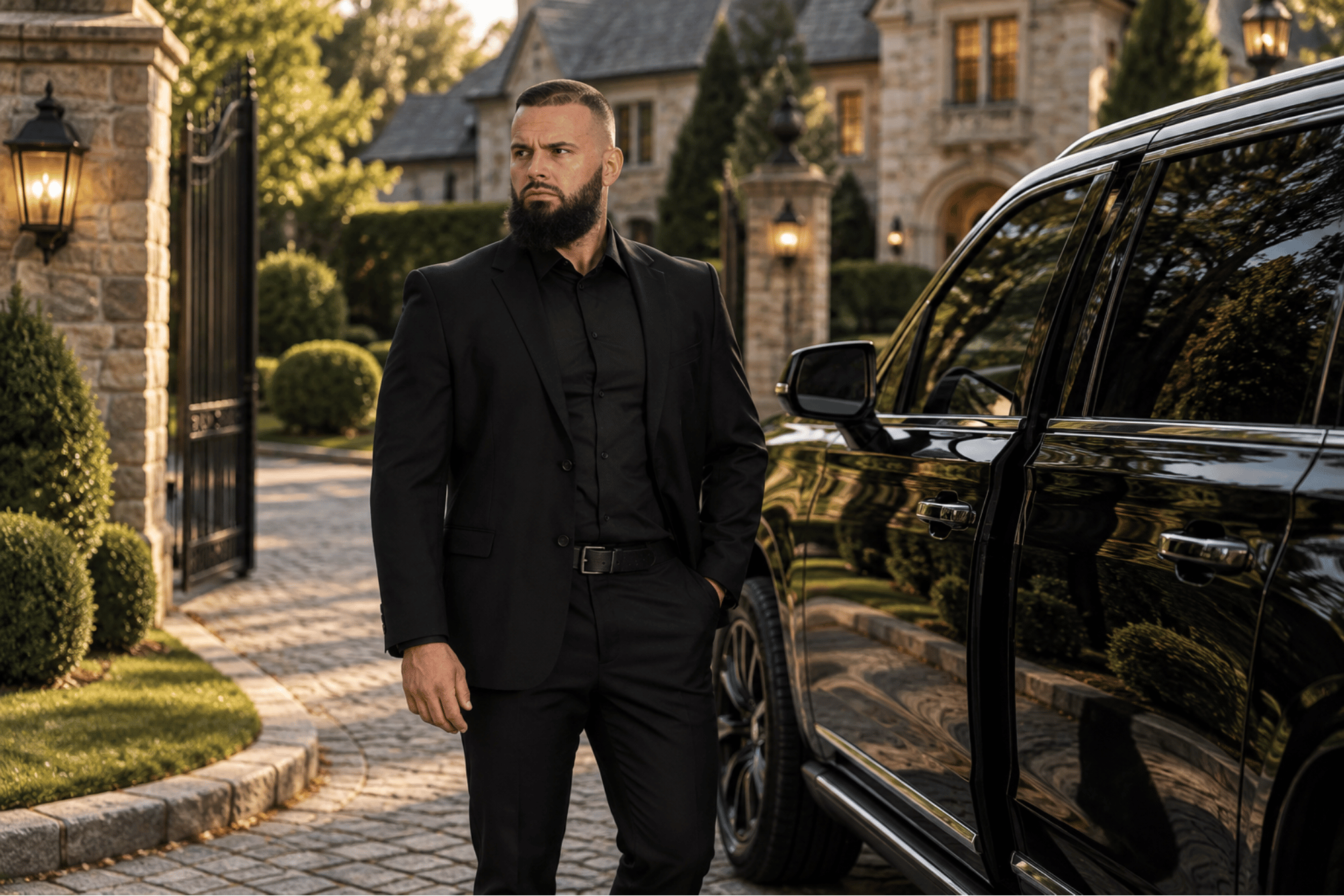
- How do your agents dress and present? Can they blend in at a board meeting, a school pickup line, and a restaurant?
- Have you worked in the specific towns and venues on our schedule?
The last point is underrated. Local knowledge is a protective asset. An agent who knows which entrance at a White Plains office tower avoids the public plaza, how long the Hutchinson River Parkway backs up on a Friday, and which FBO gate at the airport allows planeside pickup is worth more than a more decorated agent who is reading a map.
Armed or Unarmed
Most Westchester engagements are unarmed, and that is usually the right call. The core skills of protection are planning, awareness, positioning, and the ability to move a principal away from a problem. A firearm is a last resort tool that adds legal complexity and restricts where an agent can go. Many corporate campuses, schools, venues, and all commercial flights are off limits to an armed private agent.
Armed coverage is appropriate when there is a specific and credible threat of violence, when the principal is transporting high-value items, or when a threat assessment supports it. The decision should come out of a conversation about actual risk. A provider who pushes armed coverage as an upsell is telling you something about how that provider thinks.
How an Engagement With Stealth Protection Works
- A private conversation. You call (914) 653-6228 or send a request through the contact page. We ask about the principal, the schedule, the concern, and the locations. We do not need names on the first call if you prefer to hold them.
- A scoped recommendation. We propose a level of coverage. Often that is a protective agent added to a chauffeured vehicle for specific dates. Sometimes it is more. Sometimes we tell a caller that a well-run chauffeur service by the hour is all the situation requires.
- Assignment. A vetted chauffeur and a licensed agent are assigned and introduced. The standard vehicle is a Cadillac Escalade ESV. Larger parties move in Suburbans or executive Sprinters from the fleet.
- Advance and execution. Locations are checked, routes are planned, and the day runs to plan.
- Reporting. Your point of contact hears from us after each day of coverage.
Where We Work
Stealth Protection is based in Port Chester, on the New York and Connecticut line. Coverage includes all of Westchester County, including White Plains, Rye, Rye Brook, Harrison, Purchase, Scarsdale, Larchmont, Mamaroneck, Bronxville, Armonk, Chappaqua, Bedford, Pound Ridge, Tarrytown, and Yonkers. It extends across Fairfield County, including Greenwich, Stamford, Darien, New Canaan, and Westport, and throughout New York City.
Airport coverage includes Westchester County Airport, Teterboro, JFK, LaGuardia, and Newark through our airport car service.
Frequently Asked Questions
How much notice do you need for executive protection in Westchester County?More notice produces better advance work. That said, many engagements begin because something happened yesterday. Call. We operate around the clock and will tell you plainly what we can stage and how fast.
Can I book protection for a single day or a single event?Yes. Single-day and event-based coverage is common. There is no requirement for a long-term contract.
Do I have to book transportation to get a protective agent?No, though most clients do. Movement is where exposure is highest, and having the driver and the agent on one team is the main reason clients choose us.
Will the agent be in uniform?No. Agents dress to match the principal's environment. Business attire for corporate settings, understated casual for family and leisure settings.
Can your agents work in Connecticut and New York City on the same day?Yes. Cross-border days are routine for our clients. We staff those days with agents who are properly credentialed for each jurisdiction on the itinerary.
Is my information kept confidential?Yes. Schedules and identities are shared only with the people assigned to your engagement. We do not publish client names, and we sign non-disclosure agreements on request. More detail is available in our FAQ.
What is the difference between executive protection and secure transportation?Secure transportation is protection focused on the vehicle and the movement. Executive protection extends to the principal's time outside the vehicle. We explain the distinction in detail in our guide, What Is Secure Transportation.
Speak With Us Privately
If you are responsible for someone's safety and schedule, a ten minute call will tell you whether you need protection, what level, and what it involves. Call (914) 653-6228 at any hour, send a confidential inquiry, or reserve a vehicle online and note that you would like a protective agent added.
One team. One standard. One point of contact.



.png)

