.png)
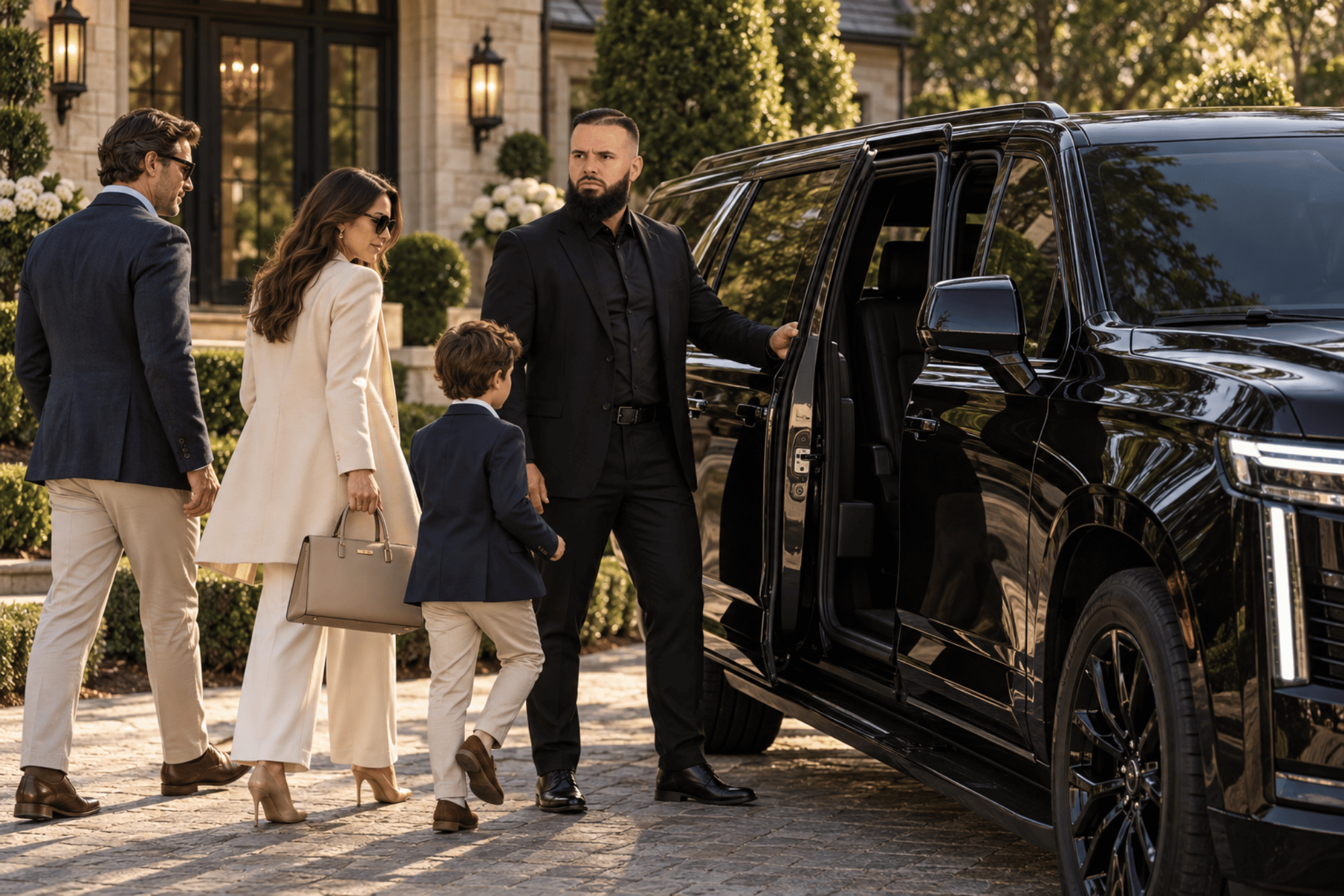
In the towns along the New York and Connecticut line, a family's week can involve more scheduled movement than a small company's. Two parents commuting in different directions. Children at different schools with practices, lessons, tutors, and games across three towns. Airport runs. Grandparents visiting. A second home on weekends. Household staff who need to get to the property.
At some point the family, or the estate manager who runs the household, decides that a dedicated driver is no longer a luxury. It is how the week gets done.
This guide covers what a dedicated family driver does, why households in Greenwich, Rye, Bedford, Scarsdale, and similar towns increasingly want that driver to have protective training, how to vet the person who will be alone with your children, and how a retained driver program compares with hiring someone onto the household payroll.
What a Dedicated Family Driver Does
The role is broader than driving.
- Daily commutes for one or both parents, turning ninety minutes of driving into ninety minutes of work or rest.
- School and activity runs, including the coordination with schools, coaches, and other families that goes with them.
- Airport transfers for family members, guests, and staff, at Westchester County Airport, Teterboro, and the commercial airports.
- Evenings. Dinners, events, and theater in the city without parking or the drive home.
- Weekend and second-home travel. The Hamptons, the Berkshires, Vermont, the Cape.
- Household logistics. Collecting a visiting relative from the train. Taking the nanny home in a storm. Moving teenagers and their friends safely on a Saturday night.
- Vehicle care. Keeping the vehicles clean, fueled, inspected, serviced, and ready.
A good family driver is punctual, patient, invisible when needed, and warm with children. A great one anticipates. The car is outside before anyone asks.
Why Families Are Asking for Protective Training
A generation ago, the family chauffeur was a hospitality role. Several things have changed.
Wealth is more visible. Property records, company filings, charity boards, and social media make it easy to learn who lives where and what they are worth. Children post their locations without thinking about it.
Routines are predictable. School starts at the same time every day. Practice ends at the same time every Tuesday. A predictable schedule is the main thing a person with bad intentions needs.
The vehicle is where the family is most exposed. Home has gates, alarms, and staff. School has its own security. The driveway, the road, and the pickup line have none of these.
Most emergencies are ordinary. A car accident. A medical event in the back seat. A breakdown at night on the Merritt Parkway. A road closed by a storm. A driver with protective and medical training handles these far better than one without.
A security driver delivers the same warm, professional service as a traditional chauffeur, and adds:
- Route planning with alternates, and deliberate variation in routes and timing.
- Awareness of vehicles or people that appear repeatedly.
- Defensive spacing and positioning in traffic.
- Knowledge of the nearest hospitals and police stations on every regular route.
- Current first aid, CPR, and AED certification.
- A rule that the vehicle is never left unattended while on assignment.
- The ability to work as one unit with a protective agent when the family adds one for travel or events.
On an ordinary day, nobody in the back seat can tell the difference. That is by design. We explain the distinction in full in Security Driver vs. Chauffeur.
Children in the Vehicle: The Standards That Matter
Parents are handing a driver the most important responsibility in the household. These are the standards we hold and the ones any family should insist on.
- Verified identity and background. Criminal history, driving record, employment verification, and references who were actually called.
- School authorization done properly. The school's office holds the driver's name and photograph on the approved pickup list. The driver carries identification. A substitute is never sent without the parents and the school being told in advance.
- A family code word. Children are taught that they do not get into any vehicle, even a familiar-looking one, with a driver they do not know unless that person gives the word.
- Correct child restraints, properly installed, for every child who needs one.
- No phone use while driving. Calls from parents are returned when the vehicle is stopped.
- No posting, ever. No photographs of the children, the house, the vehicles, or the schedule.
- Confirmed handoffs. A message to the parent or nanny when each child is collected and delivered.
- Two-adult policies on request. Some families prefer that young children travel with a nanny as well as the driver. A professional driver welcomes this.
- Discretion with teenagers. A driver who is trusted by teenagers is a safety asset. They call for a ride when they should. The driver keeps ordinary confidences and tells parents anything that bears on safety. That balance should be agreed with the parents at the start.
Choosing the Right Vehicle for Family Work
Families often assume the most impressive vehicle is the best choice. For daily family work, the opposite is usually true.
Chevrolet Suburban. The most common large SUV in any school line from Greenwich to Bronxville, which makes it close to invisible. Three rows, real cargo space, and easy access for children. See the Suburban.
Cadillac Escalade ESV. The same capacity with a more refined cabin. The standard choice for parents' commutes, evenings, and airport runs. See the Escalade ESV.
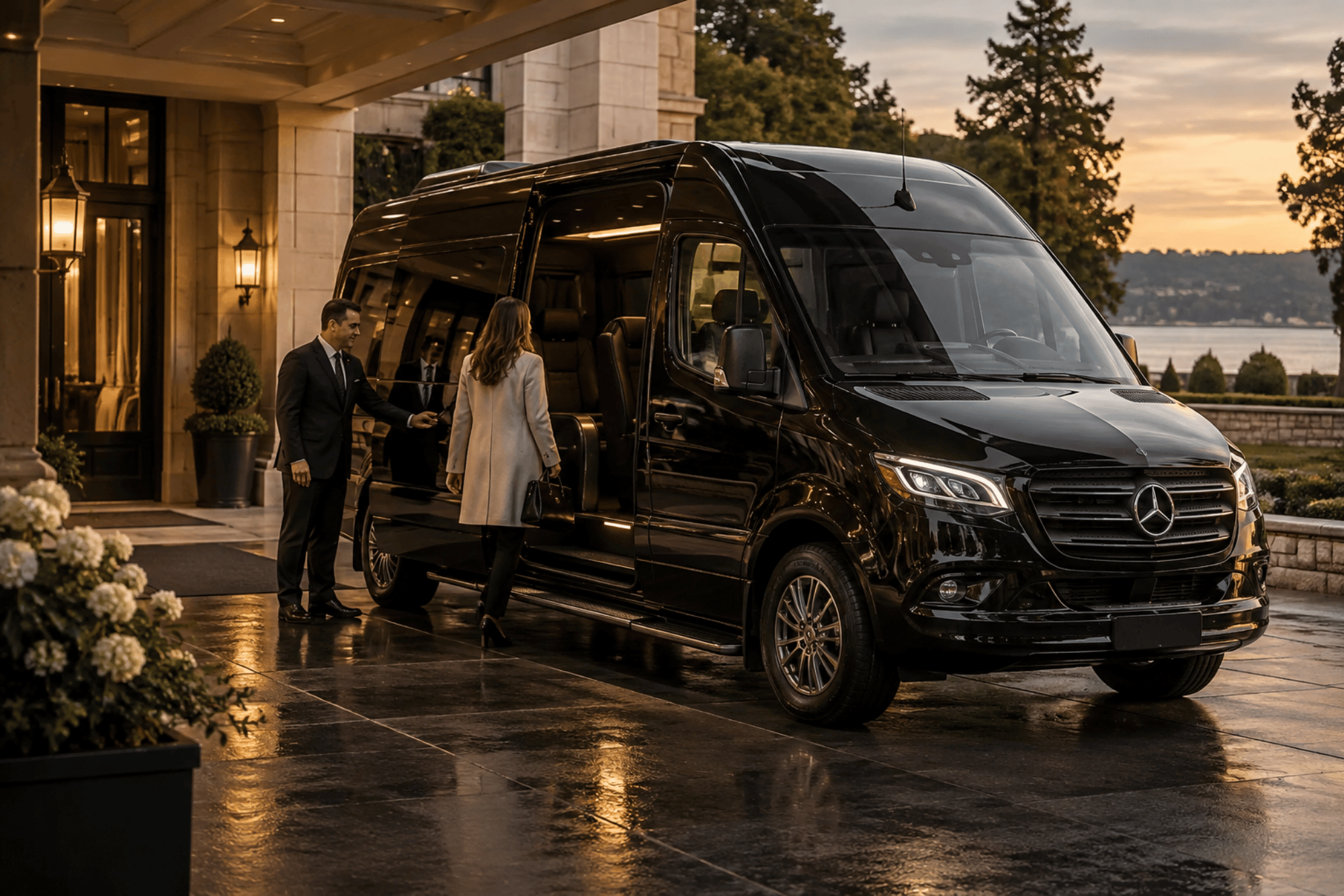
Mercedes-Benz Sprinter. For extended family, ski trips, team carpools, and travel days with serious luggage. Note that Sprinters cannot use the Merritt or Hutchinson River parkways. See the nine passenger Sprinter.
Something special. For a milestone birthday, a prom, or an anniversary, exotic vehicles are available by inquiry.
The full lineup is on our fleet page.
Hiring Directly vs. Retaining a Dedicated Driver Through a Firm
Families reach for a direct hire first because it feels personal. It can work well. It also makes the household an employer, with everything that follows.
The direct hire
Advantages: one familiar person, complete control over the schedule, and a relationship that can last many years.
What families underestimate:
- Coverage. One driver cannot cover early mornings, late evenings, and weekends indefinitely. There will be sick days, vacations, and family emergencies, and they will fall on the days you most need a driver.
- The full cost. Salary and overtime, payroll taxes, health coverage, workers' compensation, a vehicle, commercial or household-employee auto coverage, maintenance, and training.
- Liability. An accident with your employee driving your vehicle is your claim. If the driver performs protective duties, state security licensing rules may apply, and the rules differ between New York and Connecticut.
- Supervision. Someone in the household has to manage, evaluate, and if necessary terminate this person.
- Departure. When a household driver leaves, coverage stops that day, and someone with detailed knowledge of your family's routines is now a former employee.
The retained driver program
A licensed firm assigns a dedicated driver to the family under an ongoing agreement. The family sees the same person daily, with a named backup they have already met.
- The firm is the employer. Its licensing, insurance, and policies apply.
- Vehicles are provided, maintained, and substituted when one is being serviced.
- Days off and long days are staffed from a small known team.
- A second vehicle, a Sprinter for a family trip, or a protective agent for international travel is one call to the same company.
- If the fit is wrong, the driver is changed without an employment dispute.
We compare the two models in more depth, including the costs that do not show up in a salary figure, in Full-Time Executive Protection: Hiring In-House vs. Retaining a Licensed Firm.
Why the firm's licensing matters here
Most car services can supply a regular chauffeur. They cannot legally supply protective services. Most security firms can supply an agent. They do not operate vehicles and will rent a car and driver from someone else. A family that wants a driver with protective training, and the option to add an agent, usually ends up with two vendors.
Stealth Protection holds both the transportation license and the executive protection license. The driver, the vehicle, and any protective agent come from one company, under one standard, with one point of contact for the parents or the estate manager. No subcontracting and no handoffs. The services are described on our secure transportation and executive protection pages.
Local Knowledge a Family Driver Needs in This Area
Driving families around lower Fairfield County and Westchester has its own body of knowledge. An experienced local driver already has it.
- The parkways. The Merritt and the Hutchinson River Parkway are fast and scenic, poorly lit, prone to flooding in heavy rain, and closed to commercial vans. Knowing when to use them and when to stay on I-95 or I-287 matters most at night and in bad weather.
- School traffic patterns. Each private and public school has its own pickup procedure, its own line, and its own timing. A driver who learns them avoids twenty minutes of idling and the attention that comes with a vehicle parked where it should not be.
- The train stations. Metro-North stations at Greenwich, Rye, Harrison, and Stamford have short-term pickup areas that fill quickly at peak. A driver meeting a commuter or a guest needs to be staged before the train arrives.
- Storm plans. Backcountry roads lose trees and power in every major storm. A family driver keeps alternate routes in mind and keeps the vehicle fueled and equipped.
- The city. Knowing which Manhattan blocks allow a vehicle to wait, which venues have a side entrance, and how long the FDR takes at 5:00 PM is the difference between a pleasant evening and a stressful one.
- Seasonal routes. Summer Fridays to the Hamptons, winter weekends to Vermont, and the timing that avoids the worst of each.
What to Expect in the First Thirty Days
A dedicated program settles in stages.
Week one. The driver learns the household: the residences, the gate codes and procedures, the schools, the regular destinations, the family's preferences, and the other staff. Parents introduce the driver to the children and to the school offices.
Week two. Routes and timing are tested and varied. The named backup works at least one day so the children know a second face.
Weeks three and four. The routine is established. The estate manager or parent and our point of contact review what is working and adjust hours, vehicles, or procedures.
By the end of the first month the program should require almost no management from the household. That is the measure of whether it is working.
A Note for Estate Managers and Family Office Staff
If you run the household or the office, the driver program is one of many things you manage, and it should take as little of your attention as possible. What you should expect from a provider:
- One point of contact who answers at any hour and knows your household.
- Calendar-based scheduling. You send the week. Changes are handled with a text or a call.
- Written confirmations with driver name, vehicle, and timing for anything out of the ordinary.
- Consolidated monthly invoicing with trip detail suitable for the family office's records.
- Confidentiality in writing. Non-disclosure agreements for the firm and each person assigned.
- Coordination with other staff. Nannies, house managers, personal assistants, pilots, and the corporate security team, if one exists.
- Quiet reporting. Anything unusual is reported to you privately and promptly, including things that turn out to be nothing.
- Scalability. Holiday guests, a family wedding, or a graduation weekend handled by the same provider through its event transportation service.
Many households begin with hourly chauffeur service a few days a week. It is a low-commitment way to evaluate a provider's people and standards before moving to a dedicated arrangement.
A Week With a Dedicated Family Driver
An illustration, drawn from the kind of schedule we see in our area.
Monday. A 6:15 AM departure from Greenwich to Midtown for one parent. Back in time for a 2:45 PM school pickup in Rye, then hockey in Stamford. Evening return from the city.
Tuesday. School run. A grandparent arriving at Westchester County Airport. The route to school is different from Monday's.
Wednesday. The primary driver's scheduled day. The named backup, whom the children already know, covers a lighter schedule.
Thursday. Both parents attend a gala in Manhattan. A protective agent joins the vehicle for the evening because the event is publicized and the guest list is public.
Friday. Early pickup from school. The family leaves for a weekend home with luggage and a dog. The Sprinter replaces the Suburban for the day.
Saturday. The driver is on call for the teenager's evening plans.
One provider, one contact, and no moment in the week when someone was trying to find a ride.
Vetting Questions to Ask
About the person
- What background checks have been completed, and may we see the results?
- What is the candidate's driving record for the past seven years?
- What protective driving and medical training has been completed, and when?
- Has this person worked with children and with private households before?
- May we speak with references directly?
About the firm
- Do you hold a transportation license, a security agency license, or both?
- Is the driver your employee? Are the vehicles yours?
- Who is the named backup, and when can we meet that person?
- What insurance do you carry, and will you provide a certificate naming the family or the family office?
- Will every assigned person sign a non-disclosure agreement?
- What is your policy on phones, photographs, and social media?
- What are the terms for ending the arrangement?
Frequently Asked Questions
Can we have the same driver every day?Yes. A dedicated program is built around one primary driver and a named backup.
Do you provide the vehicle, or does the driver use ours?We provide licensed, insured, maintained vehicles from our fleet. That keeps liability and maintenance off the household.
Can a driver work across Connecticut, Westchester, and New York City?Yes. We are based in Port Chester on the state line, and cross-border days are routine.
Is the driver armed?Typically not. Family work is overwhelmingly about planning, awareness, and safe driving. Armed agents can be added when an assessment supports it.
Can we start part time?Yes. Many families begin with set days each week or with hourly bookings and expand from there.
How is pricing structured?Dedicated programs are quoted privately based on hours, vehicles, and staffing. There is no published rate because no two households have the same week.
Where can I learn more about the company?Our About page covers our background, and the FAQ covers policies.
Start With a Conversation
Tell us what your family's week looks like and we will tell you how we would cover it. Call (914) 653-6228 at any hour, send a confidential inquiry, or book a single trip and see the standard for yourself.
One team. One standard. One point of contact.




.png)

