.png)
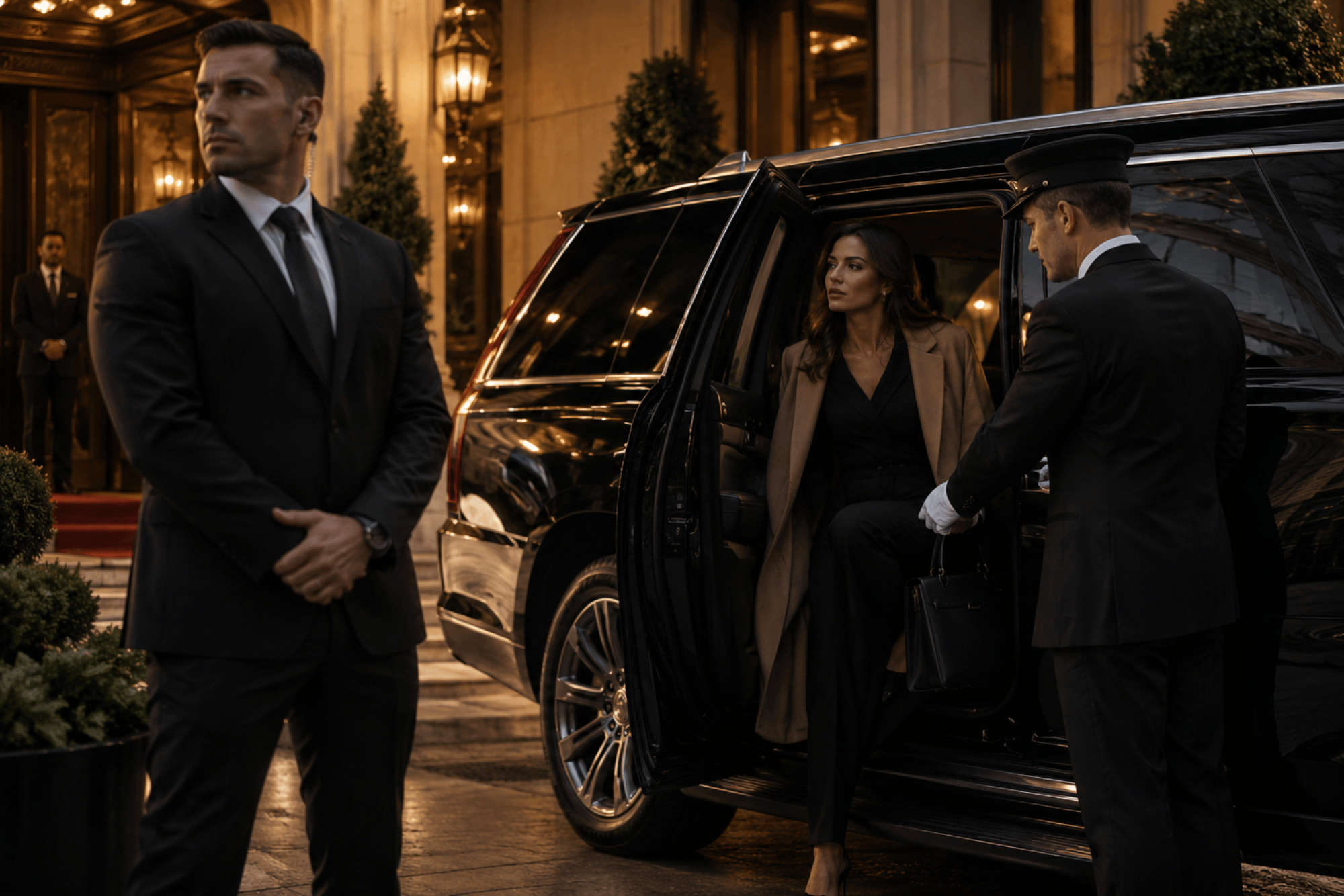
From the sidewalk, a chauffeur and a security driver are indistinguishable. Both wear a dark suit. Both drive a black SUV. Both open the door and say good morning.
The difference is in what each one is thinking about. A chauffeur is thinking about the passenger's comfort and the clock. A security driver is thinking about those things and also about the blue sedan that has made the last three turns, the delivery truck blocking the usual entrance, and which of the two hospitals on the route has a trauma center.
Executive assistants, chiefs of staff, and family office managers are often asked to arrange "a driver" for a principal without being told which kind. This guide explains the difference, describes what security drivers are trained to do, and offers a practical way to decide what level of service a principal needs. In many cases the honest answer is a good chauffeur. In some cases it is not.
What a Professional Chauffeur Does
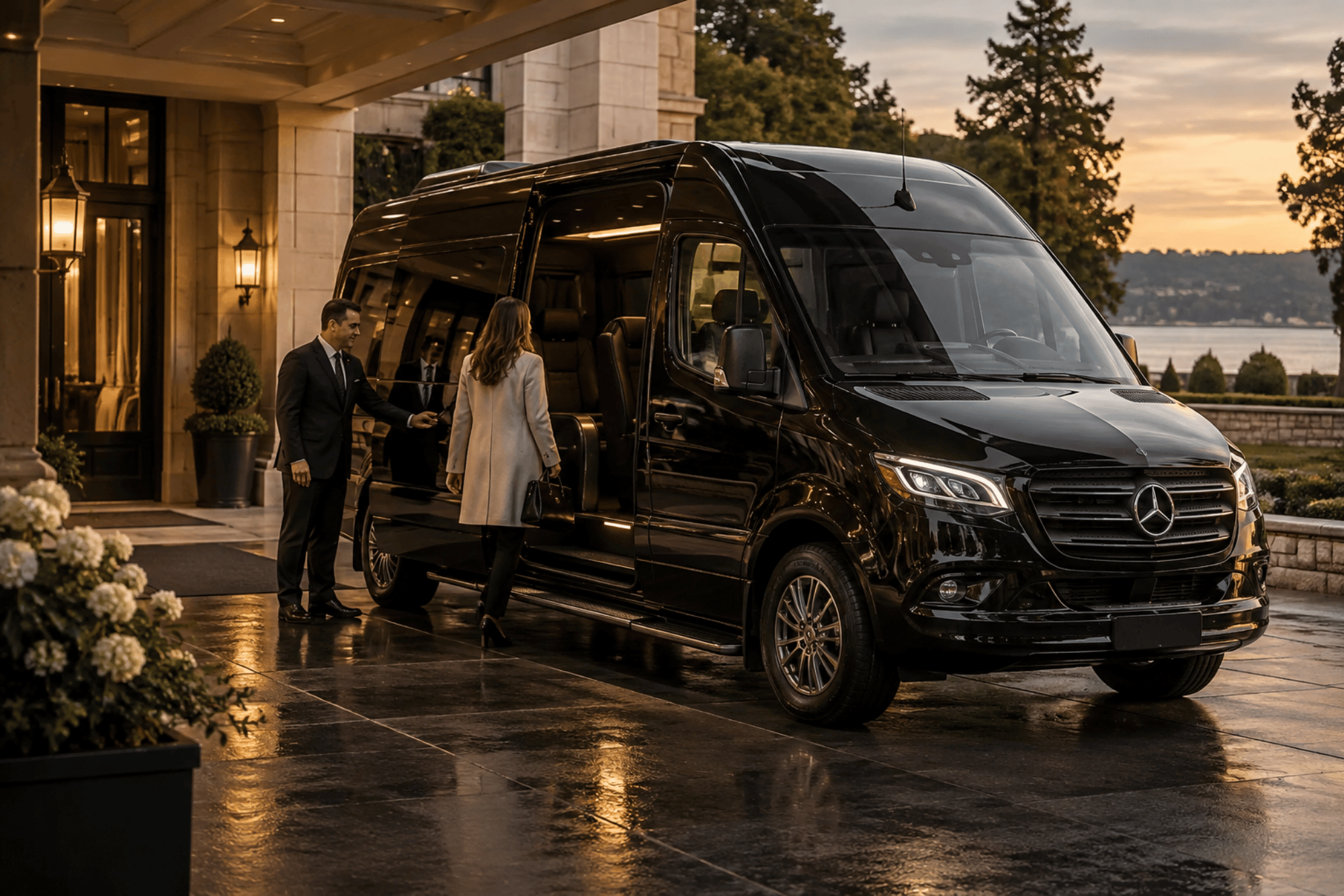
A professional chauffeur is a hospitality role with a driving skill. Done well, it is demanding work.
A chauffeur is responsible for:
- Punctuality. Arriving early, every time, and tracking flights so that airport pickups adjust themselves.
- The vehicle. Spotless, fueled, climate set, water stocked, chargers available.
- The ride. Smooth braking, smooth acceleration, no sudden lane changes. A passenger should be able to read, type, or sleep.
- Navigation. Knowing the region well enough to beat the app when the app is wrong.
- Discretion. Conversations in the back seat stay there. The chauffeur speaks when spoken to and reads the passenger's mood.
- Service. Doors, luggage, umbrellas, and patience.
This is the service behind our airport car service, corporate transportation, and hourly chauffeur bookings. For most passengers on most days, it is exactly what is required.
What a chauffeur is not trained or licensed to do is assess threats, plan protectively, or intervene. A chauffeur who notices something wrong will do what any sensible citizen would do. That is a reasonable standard for an ordinary passenger. It is not a plan.
What a Security Driver Does
A security driver does everything a chauffeur does, to the same hospitality standard, and adds a protective discipline on top. The passenger should not be able to tell the difference on a normal day.
Planning before the trip
The protective work begins before the engine starts.
- Route selection. A primary route and at least one alternate, chosen for safety as well as speed. Fewer stops, fewer choke points, fewer places where a vehicle can be boxed in.
- Route variation. Predictability is the single greatest vulnerability for any principal. Leaving the same house at the same time by the same road every day makes a person easy to find. A security driver varies routes and, where the schedule allows, timing.
- Safe havens. Knowing where to go if something happens. Police stations, hospitals with emergency departments, staffed and well-lit locations open at that hour.
- Arrival and departure points. Which entrance offers the shortest exposed walk. Where the vehicle can stage without being ticketed or moved. Where it can wait with a clear exit.
- Vehicle inspection. A deliberate check of the vehicle before every assignment, including tires, fluids, fuel, and signs of tampering.
Awareness during the trip
- Surveillance detection. Noticing vehicles or people that appear repeatedly. Most attacks and most harassment incidents are preceded by observation. A driver trained to notice observation can break the pattern early.
- Spacing. Stopping far enough behind the vehicle ahead to see its rear tires on the pavement, which leaves room to pull out and around. It is a small habit with large consequences.
- Lane choice. Avoiding the curb lane in slow traffic and avoiding positions with no exit.
- Doors locked, windows up, from the moment the principal is seated.
- Communications. A charged phone, a backup, and known numbers for the principal's office and local police.
Response when something goes wrong
Security drivers train for events that chauffeurs do not: evasive maneuvers, reversing out of a blocked position, driving through rather than stopping, and continuing to a safe haven instead of pulling over. They also train for the far more likely emergencies, which are medical. Security drivers typically hold current first aid, CPR, and AED certifications and know how to get a passenger to the right emergency department quickly.
The guiding principle is simple. The vehicle is the principal's best protection, and movement is safety. A security driver's job in a crisis is to keep moving and get away.
Staying with the vehicle
A security driver does not leave the vehicle unattended during an assignment. An attended vehicle cannot be tampered with, blocked in, or ticketed and towed. It is also ready to leave at once. When a principal exits a building, the vehicle is already at the door with the engine running.
Side by Side
Professional chauffeurSecurity driverPrimary focusComfort and punctualityComfort, punctuality, and safetyRoute planningFastest routePrimary and alternate routes chosen for safetyRoute variationNot a considerationDeliberateAdvance knowledge of locationsGeneralSpecific entrances, staging, and exitsSurveillance awarenessUntrainedTrainedEmergency drivingUntrainedTrainedMedical trainingVariesFirst aid, CPR, AEDVehicle during stopsMay park and waitAttended and readyCoordination with protective agentNoneWorks as part of the detailLicensingFor-hire driver credentialsFor-hire credentials plus state security registration where protective duties applyAppropriate forMost passengersPrincipals with elevated exposure
Where the Protective Agent Fits
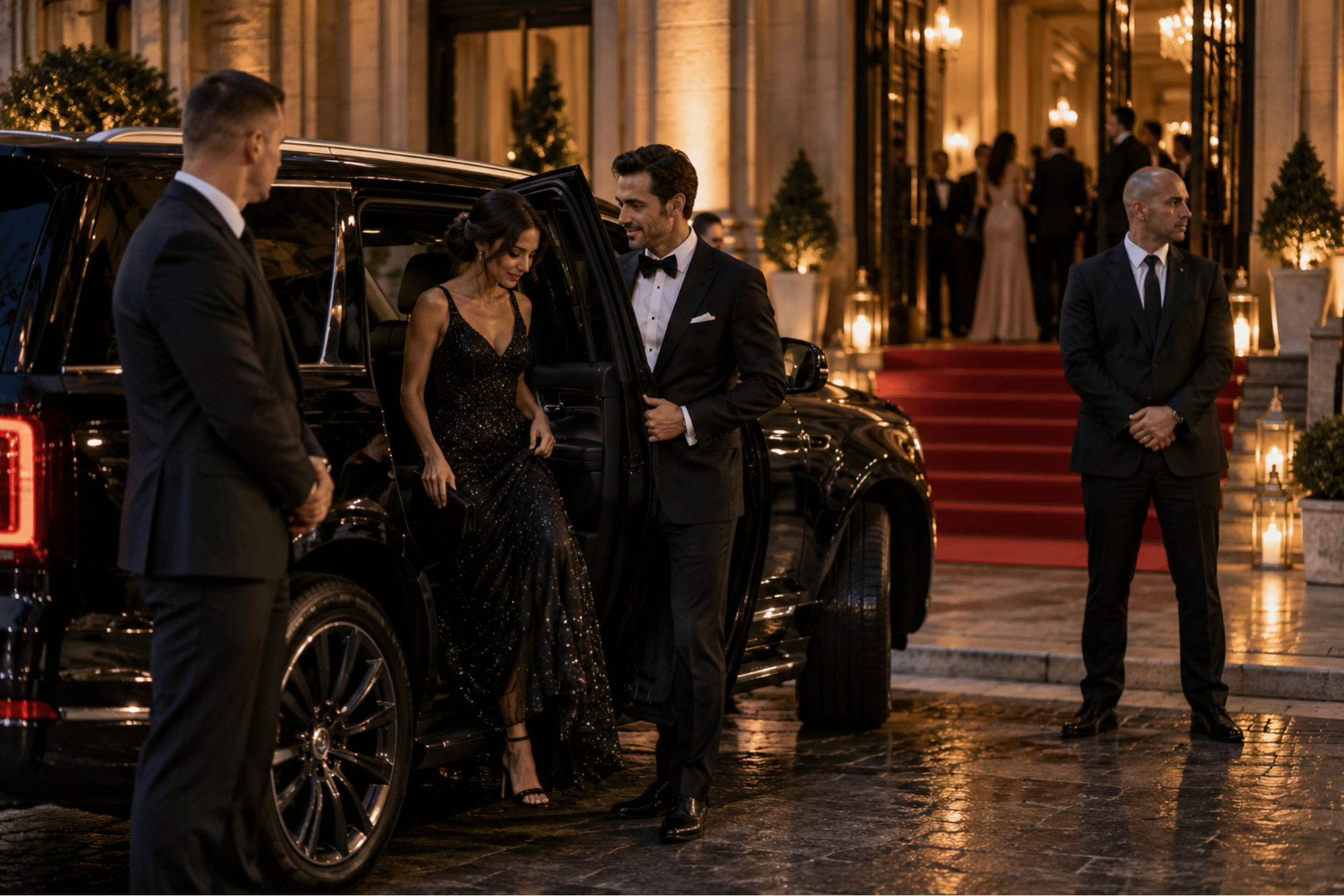
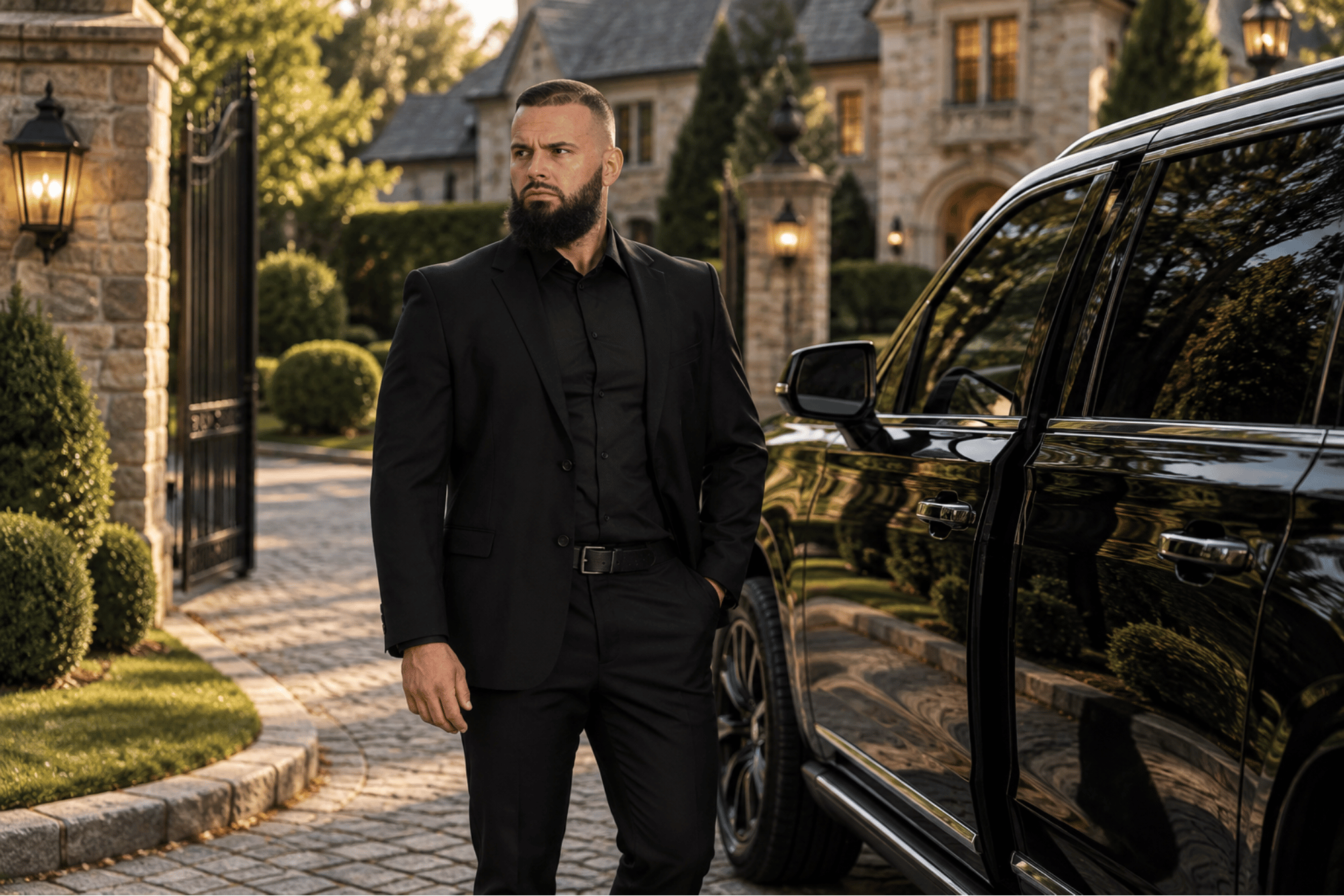
A security driver protects the principal in and around the vehicle. A protective agent, often called a bodyguard, protects the principal everywhere else. The agent walks the principal from the door to the vehicle, rides in the front passenger seat, exits first on arrival, and stays with the principal inside the destination.
The two roles are complementary, and for principals with a real concern they should be two separate people. A driver cannot watch the road and the principal at once. An agent cannot escort a principal into a building while also keeping the vehicle secure and ready. Asking one person to do both means one of the jobs is not being done at the moment it matters.
We cover the agent's role in detail in our guide to executive protection in Westchester County and on our executive protection service page.
The Licensing Problem Most Buyers Never See
Transportation for hire and private security are regulated separately. A limousine company holds transportation authority and employs licensed for-hire drivers. A security company holds a state security agency license and employs registered security personnel. Very few companies hold both.
This creates an awkward market:
- A car service that advertises "security drivers" may be offering chauffeurs with a confident title. Ask what training and what state security registration those drivers hold.
- A security firm that offers "secure transportation" usually does not own vehicles or hold for-hire authority. It rents a car and driver from a limousine company and places its agent in the front seat.
In the second arrangement, the driver is an ordinary chauffeur who met the agent that morning, was never briefed on the concern, and works for a company with no protective standard. The principal's schedule has now passed through two dispatch offices. The most exposed part of the principal's day is being handled by two companies with no shared training and no shared accountability.
Stealth Protection holds both the transportation license and the executive protection license. The driver and the agent are employed, trained, and dispatched by the same company, under one standard, with one point of contact for the client. No subcontracting and no handoffs. A change to the schedule is one call, and it reaches everyone involved at once.
This is the core of our secure transportation service. We also explain the concept from the ground up in What Is Secure Transportation.
Which Level Does Your Principal Need?
Work through these questions. They are the same ones we ask on an intake call.
1. Is the principal publicly identifiable?A named officer of a public company, a recognizable face, a person with a large online following, or a family whose wealth is widely known.
2. Is the principal's schedule predictable or publicly known?A fixed commute, a published speaking engagement, a trackable aircraft, a recurring appointment.
3. Has there been any specific concern?Unwanted contact, threats, a hostile termination, litigation, a domestic dispute, protest activity directed at the company.
4. Is this a period of elevated attention?Layoffs, a merger, an earnings miss, a product failure, a news story, a verdict.
5. What is being carried?Sensitive documents, jewelry, art, prototypes, large amounts of cash.
6. Who is in the vehicle?Children traveling without a parent change the calculation for many families.
7. Does an employer, board, or insurer require it?Many corporate security policies require security-trained drivers for certain officers. Some kidnap and ransom policies make recommendations as well.
A rough guide to the answers:
- No to everything. A professional chauffeur is the right service. Book with confidence.
- Yes to one or two, with no specific concern. A security driver is a sensible and modest step up. Same vehicle, same comfort, better planning.
- Yes to a specific concern, or yes to several. A security driver and a protective agent working as a team.
- An active, credible threat. A full protective plan, scoped after a private conversation, possibly including armed agents and residential coverage.
Needs change. A principal who requires only a chauffeur in March may need an agent for two weeks in June around an announcement, then return to normal service. A single provider that offers every level makes that adjustment a phone call. The principal keeps the same vehicles, the same standard, and often the same faces.
What It Looks Like in Practice
The commuter. A senior executive lives in Greenwich and works in Midtown. No threats, moderate public profile. The company's policy calls for a security-trained driver. The driver varies the route between the Merritt and I-95 corridors and adjusts departure times within a window the executive's assistant has approved. The executive notices only that the ride is smooth and always on time.
The announcement. A Westchester company is announcing a restructuring. For that week the CEO's usual vehicle is joined by a protective agent. Arrivals shift from the main lobby to the garage entrance. The vehicle stays attended all day. A week later, service returns to normal.
The family. A family in Bedford has received unwanted attention from an individual known to them. A security driver handles school and activity runs in a Chevrolet Suburban, chosen because it is the most common large SUV in the pickup line. The school's front office has the driver's name and photograph. Routes and timing vary daily.
The arrival. A visiting executive lands at Westchester County Airport with a corporate policy that requires protective ground transport. A licensed agent meets the aircraft planeside and a security driver waits at the stairs with a Cadillac Escalade ESV. Our HPN car service guide explains how those pickups are arranged.
Five Misconceptions About Security Drivers
"A security driver needs an armored vehicle."Armored vehicles have a place in very high threat environments. In the New York area they are rarely necessary and they come with costs: weight, handling, maintenance, and attention. For nearly every principal in Westchester, Fairfield County, and Manhattan, a standard luxury SUV driven by a trained professional is the right tool. Anonymity is its own form of protection.
"It is about aggressive driving."The opposite is true. A security driver's ride is smoother than most, because smooth driving comes from looking far ahead and leaving space. Evasive skills exist for the rare emergency. A driver who uses them on an ordinary Tuesday is doing the job badly.
"Any former police officer or veteran can do it."Those backgrounds are valuable, and many excellent security drivers have them. Protective driving, advance work, and executive service are still separate skills that require separate training. A strong resume does not replace them, and it does not replace state licensing.
"My regular driver knows my routine, so I am safe."A routine that one person knows well is a routine others can learn. Familiarity is comfortable. Variation is protective. A trained driver builds variation into the week without disrupting the principal's schedule.
"Security will make my principal feel watched."Done properly, the principal feels looked after. The planning is invisible, the driver is courteous, and the only noticeable change is that the car is always exactly where it should be.
Questions to Ask Any Provider Offering Security Drivers
- What protective driving training have your drivers completed, and when?
- Do your drivers hold state security registration?
- Are the drivers your employees? Are the vehicles yours?
- Do you hold a security agency license, a transportation license, or both?
- If I add a protective agent, does the agent work for you or for another company?
- Will the driver stay with the vehicle for the entire assignment?
- How do you vary routes, and how do you coordinate that with the principal's assistant?
- What medical training do your drivers have?
- Who inside your company will see the principal's schedule?
Clear, quick answers are a good sign. Hesitation on the licensing questions is a reason to keep looking.
Frequently Asked Questions
Is a security driver the same as a bodyguard?No. A security driver protects the principal in and around the vehicle and remains with it. A bodyguard, or protective agent, accompanies the principal on foot and inside destinations.
Does a security driver cost more than a chauffeur?Yes, modestly, reflecting the additional training and planning time. The vehicle and comfort level are the same. Contact us for a private quote based on your schedule.
Are security drivers armed?Usually not. Most protective driving is about planning and evasion. Armed personnel are available when a threat assessment supports it, and they hold the required New York credentials.
Will the vehicle look different?No. Our vehicles are standard black luxury SUVs with no markings. The point is to look like every other executive vehicle on the road. You can view them on the fleet page.
Can I start with a chauffeur and upgrade later?Yes. Because we are licensed for both transportation and protection, moving between service levels does not require a new vendor.
Do you serve Connecticut as well as New York?Yes. We are based in Port Chester on the state line and serve Westchester County, Fairfield County, and New York City daily. More about the company is on our About page.
Talk It Through With Us
If you are unsure which level your principal needs, a short confidential call will settle it. We will ask the questions above and give you a straight recommendation, including when a standard chauffeur is all you need. Call (914) 653-6228 at any hour, send a private inquiry, or reserve a vehicle online.
One company. Both licenses. One point of contact.


.png)

